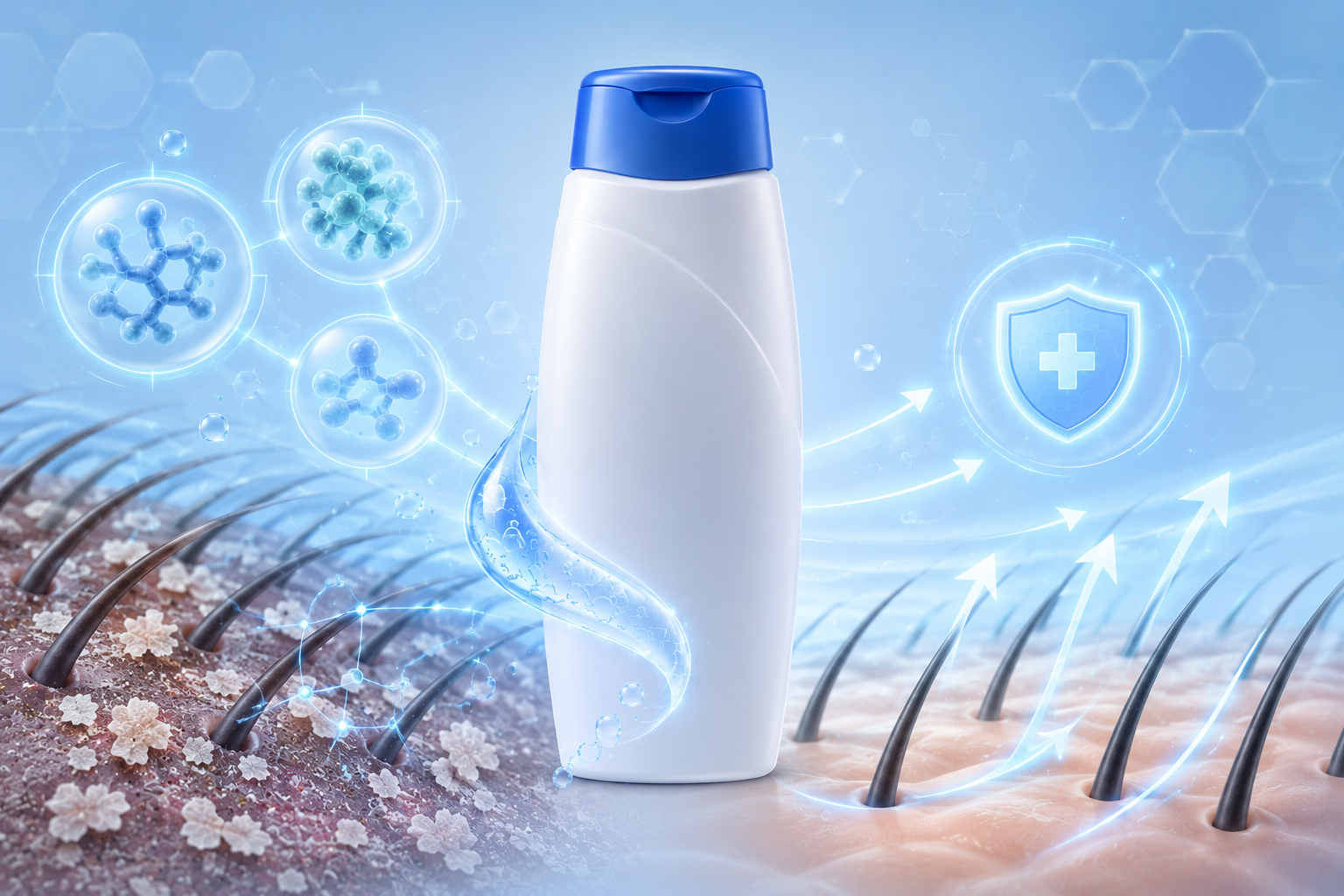
Ketoconazole shampoo targets dandruff at its source by reducing Malassezia overgrowth and calming scalp inflammation. Effective for persistent flaking, itching, and irritation, it works in both 1% OTC and 2% prescription strengths. Learn how it helps restore scalp balance and how often to use it for optimal results.
Dandruff is most commonly linked to an overgrowth of Malassezia, a yeast that lives on the scalp and feeds on skin lipids. When its levels rise, the scalp becomes irritated, leading to flaking, itching, and inflammation. Ketoconazole shampoo is effective because it directly targets Malassezia, reducing its activity and helping restore a healthier scalp environment.
Unlike standard anti‑dandruff shampoos containing zinc pyrithione or selenium sulfide, ketoconazole provides a more targeted antifungal effect. While those ingredients help manage surface scaling, ketoconazole disrupts fungal cell membrane synthesis, making it particularly useful for persistent or recurrent dandruff driven by Malassezia imbalance.
Both 1% and 2% ketoconazole shampoos work through the same mechanism, but the 2% prescription formulation delivers a stronger antifungal effect. The 1% version is suitable for routine control, while the 2% strength is often used for more pronounced symptoms or chronic scalp conditions.
Malassezia yeasts are considered one of the primary drivers of dandruff, thriving in the lipid‑rich environment of the scalp. When their population increases, they produce metabolites that irritate the skin, triggering inflammation, itching, and accelerated shedding of skin cells. This combination of irritation and disrupted cell turnover leads to the characteristic white flakes associated with dandruff.
Suppressing Malassezia directly reduces these symptoms, as lowering the fungal load helps restore a more stable scalp barrier. This is why antifungal agents are often more effective than simple exfoliating or soothing shampoos. Among available treatments, ketoconazole stands out due to its strong ability to inhibit fungal cell membrane synthesis, making it particularly effective against Malassezia species.
Compared with zinc pyrithione, which offers broader antimicrobial action but milder antifungal potency, ketoconazole provides deeper and more targeted suppression of Malassezia. This often results in faster improvement and longer‑lasting relief, especially in cases where dandruff is persistent or recurrent due to fungal imbalance.
Ketoconazole shampoo helps control dandruff by targeting the underlying fungal imbalance on the scalp. Its primary mechanism is the inhibition of ergosterol synthesis, a key component of fungal cell membranes. By disrupting this process, ketoconazole weakens Malassezia yeasts, reducing their ability to grow and trigger irritation. This direct antifungal action makes it especially effective for dandruff driven by Malassezia overactivity.
As Malassezia levels decrease, inflammation on the scalp begins to subside. This leads to less redness, itching, and flaking — the hallmark symptoms of dandruff. The reduction in inflammatory response also helps normalize the rate of skin cell turnover, preventing the rapid shedding that produces visible flakes.
By lowering fungal activity and calming irritation, ketoconazole helps restore a healthier scalp balance. Its ability to bind to the skin and remain active between washes contributes to sustained improvement, making it a reliable option for persistent or recurrent dandruff.
Ketoconazole shampoo is available in two strengths that differ in accessibility and therapeutic intensity. The 1% formulation is an over‑the‑counter option designed for mild to moderate dandruff, offering a gentler antifungal effect suitable for routine scalp maintenance. In contrast, the 2% prescription strength provides a more potent reduction of Malassezia activity and is often used for more persistent or recurrent dandruff symptoms.
Clinical data show that both concentrations improve flaking and itching, but the 2% version generally demonstrates stronger and faster results in controlled studies. This enhanced effect is linked to its higher antifungal potency, making it a preferred choice when standard OTC products do not provide sufficient relief.
The 1% shampoo is typically used for ongoing control or milder cases, while the 2% formulation is reserved for more pronounced inflammation, heavier scaling, or chronic dandruff associated with Malassezia overgrowth. Both strengths share the same mechanism of action, but their different intensities allow for tailored use depending on symptom severity.
Ketoconazole shampoo is applied directly to the scalp, focusing on areas where flaking and itching are most noticeable. It should be massaged gently into the skin rather than the hair, ensuring even coverage so the active ingredient can interact with the scalp surface. After lathering, the shampoo is typically left on for a short contact period to allow sufficient absorption before rinsing.
The frequency of use depends on general product instructions, but it is commonly applied several times per week during active dandruff flare‑ups. Consistent use is important, as irregular application may reduce its effectiveness against Malassezia, the yeast most often associated with dandruff. Once symptoms improve, many users transition to a maintenance schedule with less frequent application.
Effectiveness can be influenced by how thoroughly the shampoo is distributed, how long it remains on the scalp, and whether it is used alongside harsh styling products or exfoliating shampoos. Allowing proper contact time and avoiding immediate follow‑up with strong cosmetic products can help maintain the antifungal activity and support better long‑term control of dandruff symptoms.
Clinical studies consistently show that ketoconazole shampoo is highly effective for dandruff and seborrheic dermatitis driven by Malassezia overgrowth. In many trials, patients experience noticeable reductions in flaking and itching within the first 1–2 weeks of use, with further improvement over several additional weeks. This rapid response is linked to ketoconazole’s strong antifungal activity and its ability to remain bound to the scalp between washes.
When compared with selenium sulfide and zinc pyrithione, ketoconazole often demonstrates equal or superior efficacy, particularly in more persistent or recurrent cases. Selenium sulfide and zinc pyrithione can reduce scaling and irritation, but their antifungal potency against Malassezia is generally considered less targeted than that of ketoconazole. As a result, ketoconazole may provide more robust symptom control in patients with pronounced fungal involvement.
Clinical data also suggest that remission can last longer after a treatment course with ketoconazole, especially when followed by a maintenance regimen. Many users maintain improved scalp comfort and reduced flaking with intermittent use, supporting its role as a long‑term therapeutic option for chronic dandruff.
Ketoconazole shampoo is generally well tolerated, but some users may experience mild scalp dryness as the product reduces oil levels and fungal activity. This dryness can make the scalp feel tighter or slightly rougher during the first weeks of use, especially when applied frequently.
Irritation is another possible reaction, typically presenting as temporary redness, itching, or a warming sensation after application. These effects are usually mild and tend to lessen as the scalp adjusts. Some individuals may also notice subtle changes in hair texture, such as increased coarseness or reduced smoothness, particularly with higher‑strength formulations.
Rare reactions can occur, including more pronounced redness or sensitivity, especially in people with reactive or damaged skin. Although uncommon, these responses highlight the importance of monitoring how the scalp reacts during use. Overall, ketoconazole shampoo maintains a strong safety profile and is widely used for managing dandruff and related scalp conditions.
Although ketoconazole shampoo is effective for dandruff linked to Malassezia overgrowth, it may offer limited benefit when flaking is caused by other conditions. Dandruff that is not related to fungal activity — such as dryness‑induced flaking or irritation from hair products — may not respond to antifungal treatment, as the underlying mechanism is different.
Scalp psoriasis is another condition where ketoconazole may not provide meaningful improvement. Psoriasis involves immune‑driven inflammation and thick scaling that typically requires targeted therapies rather than antifungal agents. Similarly, contact dermatitis caused by allergens or irritants will not improve with ketoconazole, since the issue stems from skin sensitivity rather than fungal imbalance.
In cases of severe or plate‑like scaling, additional treatments such as keratolytic shampoos or medicated topical products may be necessary. While ketoconazole is a strong option for Malassezia‑related dandruff, it is not a universal solution for all scalp conditions.
Ketoconazole shampoo provides targeted antifungal action against Malassezia‑related dandruff. The table below summarizes key points, including concentration differences, expected speed of improvement, primary indications, recommended frequency of use, and notable product characteristics.
| Parameter | Details |
|---|---|
| Concentration | 1% OTC; 2% prescription |
| Speed of Improvement | Visible reduction in flaking within 1–2 weeks |
| Indications | Dandruff, seborrheic dermatitis, Malassezia‑related irritation |
| Frequency of Use | Several times weekly during treatment; less often for maintenance |
| Key Features | Strong antifungal action; longer‑lasting symptom control |