Antifungal Shampoo • Anti‑DHT Adjunct

Ketoconazole Shampoo for Hair Loss — Mechanism, Evidence, Limitations

Ketoconazole shampoo is sometimes used as an adjunct in hair‑loss routines due to its potential anti‑inflammatory and mild anti‑androgenic effects. Research suggests it may help reduce scalp DHT activity indirectly and improve follicular environment, but evidence remains limited and results vary. It is not a standalone treatment for androgenetic alopecia.

Introduction: Why Ketoconazole Shampoo Is Discussed for Hair Loss
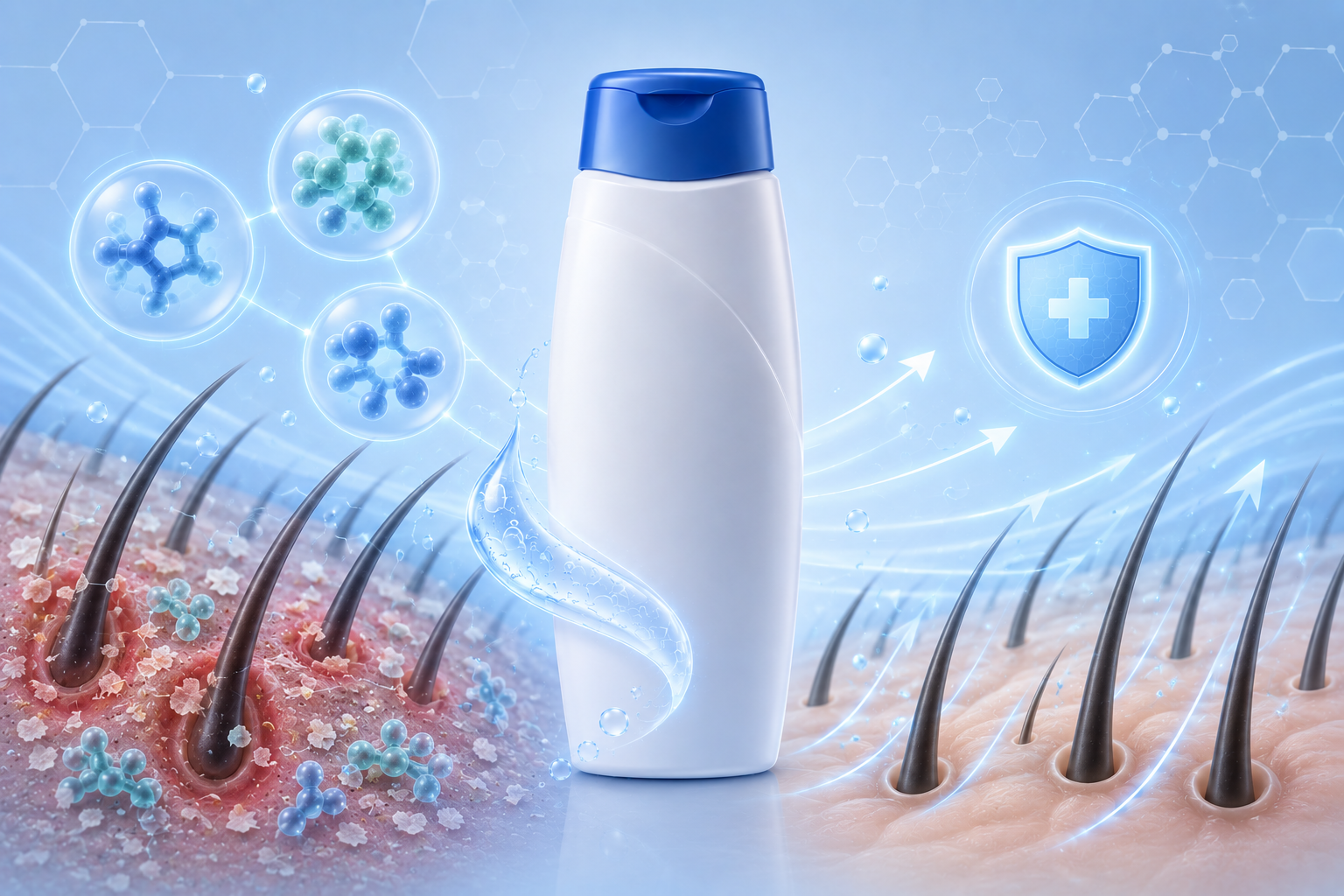
Ketoconazole shampoo is not a direct hair loss treatment and is not classified as a primary therapy for androgenetic alopecia. It does not stimulate hair follicles in the way that established agents such as minoxidil or systemic anti‑androgens do. However, it is frequently discussed in the context of androgenetic alopecia because of its effects on the scalp environment.

Ketoconazole reduces Malassezia yeast density and helps control inflammation, scaling, and irritation that can accompany chronic seborrheic changes. Inflammation around hair follicles is thought to contribute to miniaturization and worsening of androgen‑driven hair loss. By improving scalp health and potentially exerting mild anti‑androgenic activity at the local level, ketoconazole may offer an indirect benefit. Any impact on hair density is therefore considered secondary and supportive, rather than a standalone, direct regrowth mechanism.

Mechanisms Potentially Related to Hair Loss Improvement

Ketoconazole shampoo is sometimes considered in hair‑loss discussions because several of its biological effects may indirectly support healthier follicular function. One of the most relevant mechanisms is its anti‑inflammatory action. Chronic micro‑inflammation around hair follicles is frequently observed in androgenetic alopecia, and reducing this inflammatory load may help create a more favorable environment for hair growth.

The shampoo also decreases Malassezia activity, which can contribute to irritation, flaking, and barrier disruption. By lowering yeast density, ketoconazole helps stabilize the scalp microbiome and reduce inflammatory triggers. Some studies suggest it may influence local DHT pathways, but the evidence is limited and far from conclusive. Any such effect is considered mild compared to established anti‑androgen therapies.

Overall, the potential benefit of ketoconazole for hair loss is indirect. By improving scalp health, reducing inflammation, and normalizing microbial balance, it may support better conditions for hair growth, but it does not act as a primary regrowth agent.

Clinical Evidence: What Studies Show

Research on ketoconazole shampoo for androgenetic alopecia is limited but noteworthy. Several small clinical studies have explored its potential role in improving hair density and scalp condition. These investigations suggest that ketoconazole may help reduce inflammation and normalize the scalp environment, which can indirectly support healthier hair growth in individuals with androgen‑driven thinning.

Some studies have compared ketoconazole with minoxidil, not as a direct alternative but as a supportive option. While minoxidil remains the established topical treatment for stimulating follicles, ketoconazole has shown modest improvements in hair thickness and density in certain trials, likely due to its anti‑inflammatory and antifungal effects rather than direct follicular stimulation.

Overall, the evidence base is still limited, with small sample sizes and varying methodologies. Although early findings are encouraging, ketoconazole should be viewed as an adjunct rather than a primary therapy for androgenetic alopecia, and its benefits remain secondary and indirect.

1% vs 2% Shampoo for Hair Loss

The 1% ketoconazole shampoo is available over the counter and provides a milder antifungal and anti‑inflammatory effect. It is generally used for routine scalp maintenance, dandruff control, and mild seborrheic symptoms. Because its activity is less pronounced, studies evaluating hair‑loss outcomes rarely focus on the 1% formulation, and evidence for its impact on androgenetic alopecia remains limited.

The 2% prescription formulation delivers a stronger antifungal effect and more noticeable reduction in inflammation and Malassezia density. This higher potency is the reason most clinical studies examining ketoconazole’s potential role in hair‑loss management use the 2% version. Some trials have reported modest improvements in hair thickness and density, though these effects are considered indirect and secondary to improved scalp health.

Overall, the difference in clinical data reflects the difference in strength: the 2% formulation is more frequently studied and shows more measurable scalp‑related benefits, while the 1% version remains a gentler, maintenance‑oriented option.

How to Use Ketoconazole Shampoo for Hair Loss (General Information)

Ketoconazole shampoo is typically applied to the scalp rather than the hair length, as its potential benefits relate to reducing inflammation, controlling Malassezia activity, and improving overall scalp condition. To use it, the scalp should be thoroughly wetted before a small amount of shampoo is massaged gently into the skin. The goal is even coverage without aggressive scrubbing, which may irritate sensitive areas.

For optimal effect, the lather is usually left on the scalp for several minutes before rinsing. This contact time allows the active ingredient to act on yeast and inflammatory pathways. Frequency of use varies by product strength, but many general regimens involve applying it several times per week rather than daily, as overuse may lead to dryness or irritation.

Effectiveness depends on consistent use, adequate contact time, and avoiding factors that worsen scalp irritation, such as harsh cleansers or very hot water. While ketoconazole does not directly stimulate hair growth, improving scalp health may indirectly support a more favorable environment for hair retention.

Effectiveness for Different Types of Hair Loss

Ketoconazole shampoo shows its most meaningful impact in conditions where inflammation and Malassezia activity contribute to scalp irritation. In androgenetic alopecia, its effect is considered moderate and indirect. By reducing inflammation and improving scalp health, it may help create a more favorable environment for hair retention, but it does not counteract the hormonal mechanisms driving follicle miniaturization.

For telogen effluvium, ketoconazole is not effective because this condition is driven by systemic or stress‑related triggers rather than local scalp factors. Similarly, it does not benefit alopecia areata, which is an autoimmune disorder unrelated to fungal activity or seborrheic inflammation.

However, in Malassezia‑associated scalp conditions—such as dandruff or seborrheic dermatitis—ketoconazole can significantly improve symptoms by reducing yeast density and calming irritation. These improvements may indirectly support healthier hair growth, but they do not represent a direct treatment for hair loss itself.

Safety & Side Effects

Ketoconazole shampoo is generally well‑tolerated, but some users may experience mild scalp dryness. This can appear as tightness, increased flaking, or a rougher scalp surface, especially when the shampoo is used frequently or left on for extended periods. Such dryness is usually temporary and related to the product’s cleansing and antifungal activity.

Irritation is another possible reaction and may include redness, itching, or a brief burning sensation after application. These effects tend to be mild and often improve as the scalp adjusts. Some individuals also report subtle changes in hair texture, such as increased stiffness or reduced smoothness, which may result from the shampoo’s formulation rather than its active ingredient.

Rare reactions can occur, including localized rash or heightened sensitivity in people with very reactive skin. Although uncommon, these effects typically resolve after discontinuation. Overall, ketoconazole shampoo maintains a strong safety profile, with most side effects being mild, manageable, and reversible.

Limitations: When Ketoconazole Shampoo Will Not Help

Ketoconazole shampoo has clear limitations when used in the context of hair loss. It does not address hormonal mechanisms that drive androgenetic alopecia when inflammation is minimal or absent. In such cases, reducing Malassezia activity or improving scalp condition does not influence the underlying androgen‑related follicle miniaturization.

The shampoo is also ineffective for autoimmune forms of hair loss, such as alopecia areata, because these conditions are unrelated to fungal activity or seborrheic inflammation. Likewise, ketoconazole does not benefit scarring alopecias, where permanent follicle destruction occurs due to fibrosis and inflammatory damage deep within the skin.

Overall, the evidence supporting ketoconazole’s role in hair‑loss management remains limited. While it may improve scalp health and indirectly support hair retention in specific scenarios, it should not be expected to treat conditions driven by hormonal, autoimmune, or scarring processes.

Summary Table: Ketoconazole Shampoo for Hair Loss

Ketoconazole shampoo may offer indirect benefits for certain hair‑loss scenarios by improving scalp health, reducing inflammation, and lowering Malassezia activity. Its effect is modest and depends on the underlying cause of hair thinning. The table below summarizes key points relevant to its use in hair‑loss contexts.

Parameter Details
Concentration 1% OTC or 2% prescription
Type of Hair Loss Indirect benefit in androgenetic alopecia; not effective for autoimmune or scarring types
Expected Effect Improved scalp condition; mild support for hair retention
Speed of Improvement 1–2 weeks for scalp symptoms; hair‑related effects take longer
Key Features Anti‑inflammatory, antifungal, supports healthier scalp environment

Ketoconazole Shampoo for Hair Loss FAQ

Ketoconazole may offer an indirect benefit by reducing inflammation and improving scalp health, but it is not a primary treatment for androgenetic alopecia.

The 1% version is OTC and milder, while the 2% version is prescription‑strength and provides stronger antifungal and anti‑inflammatory effects.

Daily use is generally not necessary and may increase dryness or irritation. Most routines involve several uses per week depending on product strength.

Yes, it can reduce itching and inflammation by lowering Malassezia activity and calming irritated scalp areas.

Scalp symptoms often improve within 1–2 weeks. Any hair‑related benefits take longer and remain indirect.

Yes, they are often used together. Ketoconazole supports scalp health, while minoxidil targets follicular stimulation through a different mechanism.

Suitability depends on age and local guidelines. A healthcare professional should be consulted before use in children.

Yes, by reducing yeast activity and inflammation, it can help normalize oil production associated with seborrheic conditions.

Yes, it can be applied to beard areas affected by dandruff‑like flaking or seborrheic dermatitis.

Some studies show modest improvements, but effects are indirect and depend on reducing inflammation rather than stimulating follicles.

It may help reduce scalp inflammation that contributes to worsening thinning, but it does not stop hormonal miniaturization.

Lack of improvement may indicate a non‑inflammatory or unrelated cause of hair loss. Other conditions may require different approaches.